
jai jagdish hare aarti pdf
- sharansh261020
- Mar 16
- 6 min read

The "Jai Jagdish Hare" Aarti is a revered devotional song dedicated to Lord Vishnu, one of the principal deities in Hinduism. Often recited during religious ceremonies and festivals, this Aarti holds deep spiritual significance for millions of devotees around the world. It encapsulates themes of devotion, worship, and the divine qualities of the Lord. This article delves into the history and meaning of "Jai Jagdish Hare," explores its usage in worship, provides resources for accessing the Aarti in PDF format, and highlights its cultural impact within the Hindu community. Through this exploration, readers will gain a better understanding of why this Aarti remains a powerful expression of faith and devotion in contemporary times.
|| श्री जगदीश जी की आरती ||
ॐ जय जगदीश हरे,स्वामी जय जगदीश हरे l
भक्त जनों के संकट,दास जनों के संकट,क्षण में दूर करे ll
ॐ जय जगदीश हरे
जो ध्यावे फल पावे,दुख बिनसे मन का.स्वामी दुख बिनसे मन का l
सुख सम्पति घर आवे,सुख सम्पति घर आवे,कष्ट मिटे तन का ll
ॐ जय जगदीश हरे
मात पिता तुम मेरे,शरण गहूं मैं किसकी,स्वामी शरण गहूं मैं किसकी l
तुम बिन और न दूजा,तुम बिन और न दूजा,आस करूं मैं जिसकी ll
ॐ जय जगदीश हरे
तुम पूरण परमात्मा,तुम अंतरयामी,स्वामी तुम अंतरयामी l
पारब्रह्म परमेश्वर,पारब्रह्म परमेश्वर,तुम सब के स्वामी ll
ॐ जय जगदीश हरे
तुम करुणा के सागर,तुम पालनकर्ता,स्वामी तुम पालनकर्ता l
मैं मूरख खल कामी,मैं सेवक तुम स्वामी,कृपा करो भर्ता ll
ॐ जय जगदीश हरे
तुम हो एक अगोचर,सबके प्राणपति,स्वामी सबके प्राणपति l
किस विधि मिलूं दयामय,किस विधि मिलूं दयामय,तुमको मैं कुमति ll
ॐ जय जगदीश हरे
दीनबंधु दुखहर्ता,ठाकुर तुम मेरे,स्वामी ठाकुर तुम मेरे l
अपने हाथ उठाओ,अपने शरण लगाओ,द्वार पड़ा तेरे ll
ॐ जय जगदीश हरे
विषय विकार मिटाओ,पाप हरो देवा,स्वमी पाप हरो देवा l
श्रद्धा भक्ति बढ़ाओ,श्रद्धा भक्ति बढ़ाओ,संतन की सेवा ll
ॐ जय जगदीश हरे
ॐ जय जगदीश हरे,स्वामी जय जगदीश हरे l
भक्त जनों के संकट,दास जनों के संकट,क्षण में दूर करे ll
ॐ जय जगदीश हरे ll
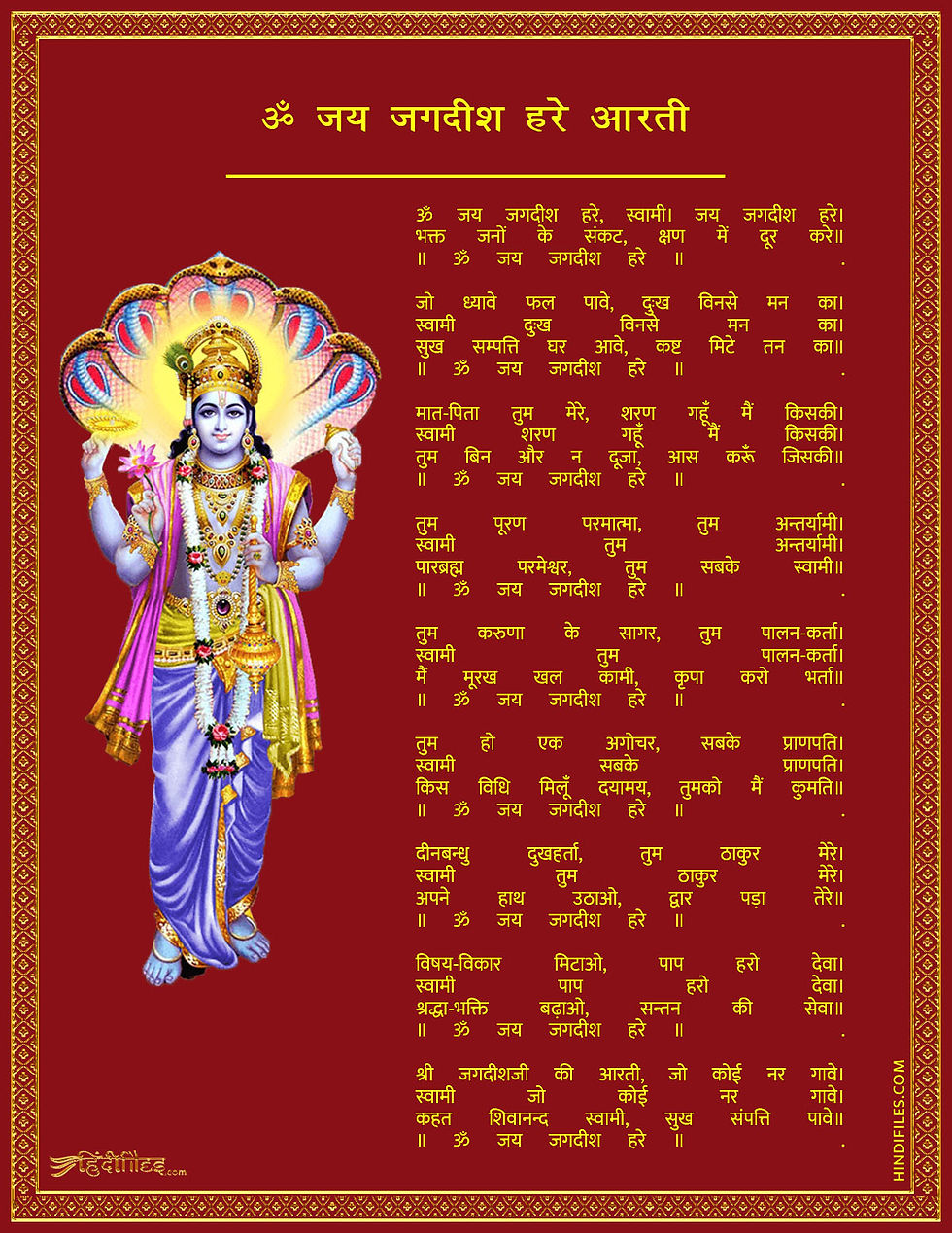
Overview of "Jai Jagdish Hare" Aarti
What is an Aarti?
An Aarti is like a spiritual high-five to the divine! It’s a Hindu religious ritual of worship where devotees sing praises and offer light—typically from a small flame or diya—accompanied by a chorus of enthusiasm. This melodic offering invites blessings and connection to a deity, filling the space with devotion and spiritual vibes.
The Role of Aarti in Hinduism
In Hinduism, Aarti plays a key role in rituals, serving as a form of thanks and celebration of the divine presence. It’s not just about the flickering flames; it embodies love, gratitude, and devotion. Families gather, voices rise, and the atmosphere buzzes with positive energy as they express their heartfelt oblations to their chosen deities.
Historical Significance of the Aarti
Origins and Authorship
The origins of "Jai Jagdish Hare" can be traced back to the mid-20th century, often attributed to the profound devotion of the poet and saint, Jagdish Chandra. The simplicity and melodic charm of the Aarti make it an enduring favorite among many Hindu households. It’s like an old favorite song that never goes out of style!
Evolution Over Time
Over the decades, "Jai Jagdish Hare" has transformed from a local prayer recited in homes to a staple in temples worldwide. Its catchy melody lends itself well to various musical interpretations, ensuring that it remains as fresh and lively as ever, making even the most rhythmically challenged feel like a rock star during worship.
Lyrics and Meaning of "Jai Jagdish Hare"
Translation of the Lyrics
The lyrics of "Jai Jagdish Hare" convey a deep reverence, calling upon Lord Vishnu as the protector and sustainer of the universe. It’s essentially a divine shout-out that translates to something like "Victory to you, Lord of the Universe," embodying gratitude and reverence for all that he represents.
Spiritual Significance of the Verses
Each verse of the Aarti encapsulates a prayerful message, echoing devotion, protection, and the call for guidance. It's a delightful reminder that spirituality is intertwined with daily life, allowing devotees to connect with the divine and draw strength from their faith, no matter the challenges faced.
Usage in Hindu Worship and Festivals
Common Occasions for Recitation
"Jai Jagdish Hare" is often recited during daily worship (puja), special occasions, and festivals such as Diwali and Janmashtami. It’s a fantastic way to uplift the spirits of the gathering, creating an atmosphere of joy and togetherness—perfect for when you really want to impress Auntie with your devotion!
Regional Variations in Practice
While "Jai Jagdish Hare" is celebrated universally, regional variations do exist! Some regions might put their own twist on the melody or incorporate unique instruments. You might even stumble upon cool choreography when it’s sung lively during local festivals, proving that spirituality can indeed have a splash of fun!
Accessing the Aarti: PDF Resources
Where to Find Official PDFs
If you're on a quest for the "Jai Jagdish Hare" Aarti in PDF format, fear not! Numerous platforms offer official prints, including reputable religious sites and community portals. Websites like ISKCON or various Hindu temple pages frequently provide downloadable PDFs, ensuring you get a version that's both accurate and reverent. Just keep your eyes peeled for the “Download” button—it’ll be your golden ticket to devotional bliss.
Popular Websites and Apps
Searching for something a little more user-friendly? Check out popular apps like "Saavn" or "Gaana," which not only offer the Aarti in a PDF format but often come with the audio track for multi-sensory enjoyment. Websites like Scribd can also be a treasure trove for PDFs, as users often share their own compilations. Just remember to double-check the source—nobody wants a rogue version of the Aarti haunting their worship!
Musical Variations and Renditions
Traditional vs. Contemporary Versions
When it comes to "Jai Jagdish Hare," you’ll find both traditional and contemporary renditions that can tug at your heartstrings. Traditional versions typically feature classic instrumentation—a simple yet profound sound that resonates in temples across India. Contemporary versions, on the other hand, often include modern beats and instruments, catering to a new generation of devotees. It’s like comparing grandma’s homemade cookies to a fancy bakery treat—both delicious, but distinctly different!
Notable Artists and Performances
Some artists have made the "Jai Jagdish Hare" Aarti their signature piece, elevating the spiritual experience into a musical masterpiece. Renowned singers like Jagjit Singh and Anup Jalota have lent their voices to memorable renditions, each adding their unique flair. Whether it’s a soothing version to calm your soul or an energetic take to uplift your spirits, these performances remind us just how versatile devotion can be.
Devotional Practices Associated with the Aarti
Preparation for the Aarti Ceremony
Preparing for the Aarti is a sacred ritual that sets the mood for worship. Typically, devotees clean the area, adorn the altar with fresh flowers, and prepare various offerings like fruits and sweets. Lighting the diya (lamp) plays a crucial role, symbolizing the dispelling of darkness and ignorance. Think of it as setting the stage for a divine performance—only, in this case, the audience is the universe!
Common Rituals Performed During Aarti
During the Aarti, devotees gather around with lit diyas, singing praises and rotating the light in a circular motion. It’s a beautiful display, akin to a spiritual dance, fostering a sense of community and connection. Many also engage in bowing down, chanting, and partaking in the after-blessing prasad. Just picture it: a harmonious blend of song, light, and devotion, creating an ambiance ripe with love and spirituality.
Conclusion: The Cultural Impact of "Jai Jagdish Hare"
Influence on Modern Hindu Practices
"Jai Jagdish Hare" isn’t just a song; it’s a cultural phenomenon that weaves its way into the fabric of Hindu life. Its melodies have transcended generations, adapting to modern settings while staying true to the roots of devotion. Today, you’ll find it echoing in homes, temples, and even online, shaping the way Hinduism expresses reverence in the contemporary world.
Conclusion and Final Thoughts
In a nutshell, "Jai Jagdish Hare" serves as a bridge between tradition and modernity, enhancing the richness of spiritual practices. Whether you find solace in traditional chants or groove to contemporary beats, this Aarti holds a special place in the hearts of many. So, whether you’re downloading that PDF or belting it out at a gathering, remember—devotion is best shared and celebrated, one note at a time!In conclusion, "Jai Jagdish Hare" continues to be a significant part of Hindu worship, embodying the essence of devotion and reverence for Lord Vishnu. Its rich history, meaningful lyrics, and widespread usage in ceremonies highlight its enduring importance in the lives of devotees. Whether sung in temples or homes, this Aarti fosters a deep spiritual connection and community among believers. As it transcends generations, "Jai Jagdish Hare" remains a timeless expression of faith that will continue to inspire and uplift countless souls.
Frequently Asked Questions
What is the meaning of "Jai Jagdish Hare"?
The phrase "Jai Jagdish Hare" translates to "Victory to Lord of the Universe," expressing reverence and devotion to Lord Vishnu, the preserver and protector within the Hindu trinity.
When is "Jai Jagdish Hare" Aarti typically performed?
This Aarti is commonly recited during daily prayers, as well as during special occasions and festivals, such as Diwali and Janmashtami, to honor Lord Vishnu.
Where can I find the PDF version of "Jai Jagdish Hare" Aarti?
PDF versions of the Aarti can be found on various religious websites, mobile apps dedicated to Hindu prayers, and in devotional books available at temples or bookstores.
Are there different musical renditions of "Jai Jagdish Hare"?
Yes, "Jai Jagdish Hare" has been adapted into various musical styles, featuring traditional chants as well as contemporary versions by numerous artists, reflecting its popularity and cultural significance.


Comments