
devi aarti marathi lyrics
Devi Aarti holds a cherished place in Marathi culture, serving as a profound expression of devotion and reverence towards the divine feminine. This ritualistic hymn, typically sung during worship, encapsulates the essence of gratitude, love, and surrender to the goddess. With its rich lyrical content and deep spiritual significance, Devi Aarti not only enhances the worship experience but also fosters a sense of community among devotees. As we explore the lyrics, meanings, and cultural context surrounding Devi Aarti, we will uncover the layers of devotion that make this practice a vital component of Hindu worship, particularly in Marathi traditions.
महाराष्ट्राची कुलस्वामिनी आई तुळजाभवानी ची आरती:-
हिंदू धर्म
जय देवी तुळजाअंबाई
चंडमुंड वधुनिया
महिषासुर वधुनिया
हे विलासी तुझे पाई
वाघावर स्वार झाली
हाती सोन्याचे गोठ
बाजूबंध दंडा मधे
जय देवी तुळजाअंबाई
आई तुझ्या दरबारी
लाखखंडी भर तेल
जयसे कोड़ी मधे
जय देवी तुळजाअंबाई
कवडयांचे गड़ी माड़
करिते भक्तांचा सांभाड
तुडजापुरची माता भवानी
जय देवी तुळजाअंबाई
जय देवी तुळजाअंबाई
चंडमुंड वधुनिया
महिषासुर वधुनिया
हे विलासी तुझे पाई
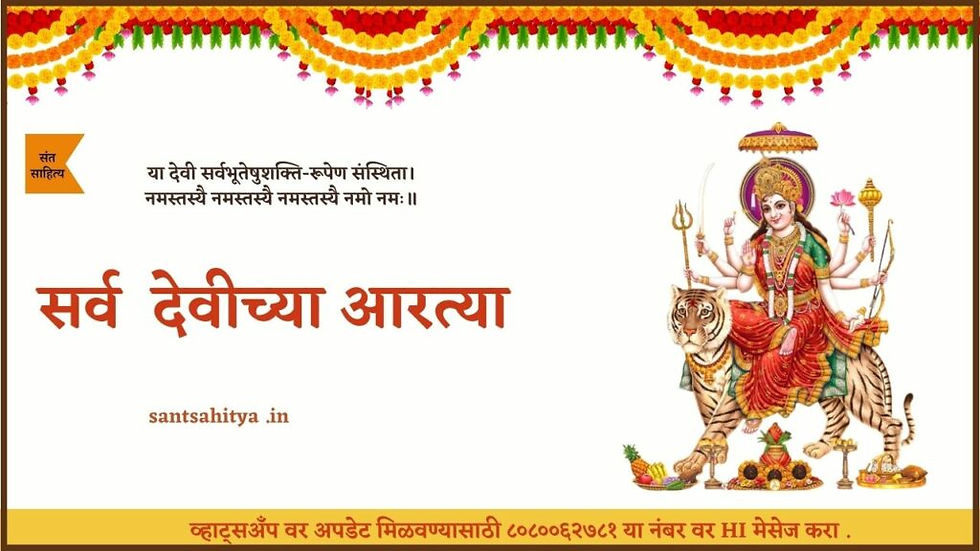
Introduction to Devi Aarti
What is Aarti?
Aarti is a divine ritual that involves singing praises while offering light to a deity, typically with a small flame from a diya (lamp) or a camphor. It’s like the ultimate “thank you” card sent directly to the heavens, but with more sparkle and fewer postage costs! People gather around, clapping and singing, creating an atmosphere that’s both joyful and spiritual.
Historical Context of Devi Aarti
Though Aarti is performed in various forms across India, the Devi Aarti holds a special place in Hindu traditions. Rooted in ancient practices of worship, it has evolved over centuries, blending folklore and devotion. The stories surrounding the goddesses have influenced the lyrics and the emotions tied to them, making each performance a unique experience steeped in history and reverence.
Significance of Devi Aarti in Marathi Culture
Role in Festivals and Celebrations
In Marathi culture, Devi Aarti is like the cherry on top of a festive sundae. It’s an integral part of festivals like Navratri and Ganesh Chaturthi, where the atmosphere is charged with devotion. Families gather to sing Aarti, creating a sense of unity and joy—it's where the spirit of celebration meets spirituality, often accompanied by delicious snacks (because let's be honest, food is a festival essential!).
Connection to Spiritual Practices
Devi Aarti is more than just a song; it’s a gateway to spiritual engagement. Engaging in this ritual helps individuals connect with the divine, fostering a sense of peace and grounding. Many believe that singing Aarti aids in focusing the mind and heart, enhancing one’s meditative practices—like putting the ‘Om’ in ‘Home’!
Overview of Devi Aarti Lyrics
Common Themes in the Lyrics
The lyrics of Devi Aarti often revolve around themes of love, protection, and the nurturing nature of the goddess. They reflect a deep admiration and trust in the divine mother, celebrating her strength and compassion. Think of it as a heartfelt fan letter to a superhero, glorifying their powers and asking for a little help now and then!
Different Versions Across Regions
While the essence of Devi Aarti remains the same, various regions have their own distinct versions, sometimes with local dialects or unique tunes. This diversity adds a vibrant tapestry to the Aarti tradition, with each rendition carrying its own cultural nuances—like a family recipe that’s a bit different in every household, but still just as delicious!
Meaning and Interpretation of Devi Aarti
Linguistic Breakdown of Key Phrases
Diving into the lyrics of Devi Aarti reveals a treasure trove of meaning. Words are often imbued with deep significance, expressing devotion, gratitude, and a plea for blessings. Each phrase is carefully crafted, with layers of meaning that can resonate differently depending on the listener’s heart and mindset—kind of like a good mystery novel with twists you didn’t see coming!
Symbolism in the Lyrics
The lyrics of Devi Aarti are rich with symbolism, using metaphors and imagery that evoke the goddess’s qualities. Light represents knowledge, darkness symbolizes ignorance, while the flame signifies purity and divinity. Each line serves as a reminder of the balance between the worldly and the spiritual, illuminating the path to inner peace—like a GPS for the soul!
Popular Devi Aarti Versions
Famous Compositions and Their Creators
When it comes to Devi Aarti, several iconic compositions have stood the test of time. One of the most revered is "Jai Ambe Gauri," composed by the legendary Bhakta Prahlad, which beautifully encapsulates the essence of devotion. Another gem is "Maa Durga Ki Aarti" by the great poet-saint Tulsidas. Each of these aartis is steeped in tradition, showcasing the creativity and spiritual fervor of their creators. You can't help but feel a little uplifted just by humming along!
Modern Adaptations of Traditional Aarti
In our fast-paced world, traditional is getting a trendy makeover! Modern artists are breathing new life into Devi Aarti, incorporating contemporary instruments and fusion styles. Think of the melodious fusion of classical and pop by artists like Anuradha Paudwal or the soulful renditions by various indie musicians. These reinventions respect the essence of the traditional aartis while making them relatable for the youth. So, whether you're vibing at a family gathering or jamming in your room, there’s a version of Devi Aarti for everyone!
How to Perform Devi Aarti
Materials Needed for Aarti
Ready to channel your inner priest or priestess? First, you’ll need a few essentials for the Aarti ceremony. Gather a lamp or diya with ghee or oil (no, you can’t use leftovers from last night’s curry!), some cotton wicks, fresh flowers, a bell, and incense sticks. And if you’re feeling extra festive, throw in some sweets as a prasad to butter up the divine!
Step-by-Step Guide to Conducting Aarti
Now that you have your materials, let’s get to the juicy part. Start by placing the diya in front of the deity’s idol or picture. Light it up like you mean it! Next, invoke the Devi’s presence with your favorite prayers or mantras. Ring the bell to signal the start of the Aarti—think of it as a spiritual doorbell. Now, gently rotate the lighted diya in a circular motion around the idol, while singing the Aarti. Don’t forget to keep your heart full of devotion! Finally, offer the prasad and soak in the divine vibes. Voilà, you’re all set!
Cultural Importance of Aarti in Hindu Worship
Connection to Devotion and Surrender
Aarti isn’t just a ritual; it’s a heartfelt expression of devotion. It symbolizes surrender, where devotees offer their prayers and gratitude to the divine. The act of performing Aarti serves as a reminder of our humility, serving to connect us with higher energies. When those flames flicker, it’s like our worries are melting away in the glow of devotion—such a simple act yet, oh so profound!
Impact on Community and Social Gatherings
Ever been to a family function or community festival where Aarti isn’t performed? Yeah, me neither! Aarti acts as a unifying force, bringing people together in shared spirituality. It’s often the highlight of gatherings, allowing everyone to participate in a collective outpouring of love and devotion. The sense of community it fosters can be as warm as grandma’s hugs—everyone singing and celebrating, leaving you with a heart as full as the thali of sweets!
Conclusion and Reflection on Devi Aarti
Personal Reflections on the Practice
For many, performing Devi Aarti transcends mere ritual—it's a sacred practice that brings peace and purpose. Reflecting on my own experiences, I’ve found these moments to be cathartic, often leaving me more grounded and centered. Whether it's the flicker of the flame or the sound of the bell, something about it just resonates with the soul. Plus, when you're singing along with family and friends, it’s hard not to feel a little bit magical!
Future of Devi Aarti in Contemporary Worship
As we leap into the future, the essence of Devi Aarti is likely to evolve but will forever hold a special place in hearts. With technology bringing worship into our living rooms through live-streaming and social media, who knows what adaptations we might see? However, the core message—devotion, love, and community—will continue to shine through, reminding us that while times may change, the divinity of the practice remains timeless. Let's keep the spirit alive, one Aarti at a time!In conclusion, Devi Aarti is more than just a ritual; it is a heartfelt expression of devotion that resonates deeply within the Marathi community. The powerful lyrics and the collective act of singing together create a sense of unity and spiritual connection among devotees. As we continue to celebrate and perform Devi Aarti, we not only honor the divine feminine but also strengthen our cultural heritage and communal bonds. Embracing this beautiful practice allows us to keep the spirit of devotion alive for generations to come.
Frequently Asked Questions
What is the meaning of Devi Aarti?
Devi Aarti is a devotional hymn sung in praise of the goddess, expressing gratitude and reverence while seeking her blessings.
How is Devi Aarti performed?
Devi Aarti is typically performed by lighting a lamp or diya, singing the Aarti while rotating the light in front of the deity, and offering flowers or incense.
Are there different versions of Devi Aarti?
Yes, there are various versions of Devi Aarti, each with unique lyrics and melodies, reflecting regional and cultural differences within Hindu worship.
What materials are needed to perform Devi Aarti?
Common materials include a diya or lamp, wicks, ghee or oil, flowers, incense, and a plate to hold the offerings.


Comments